
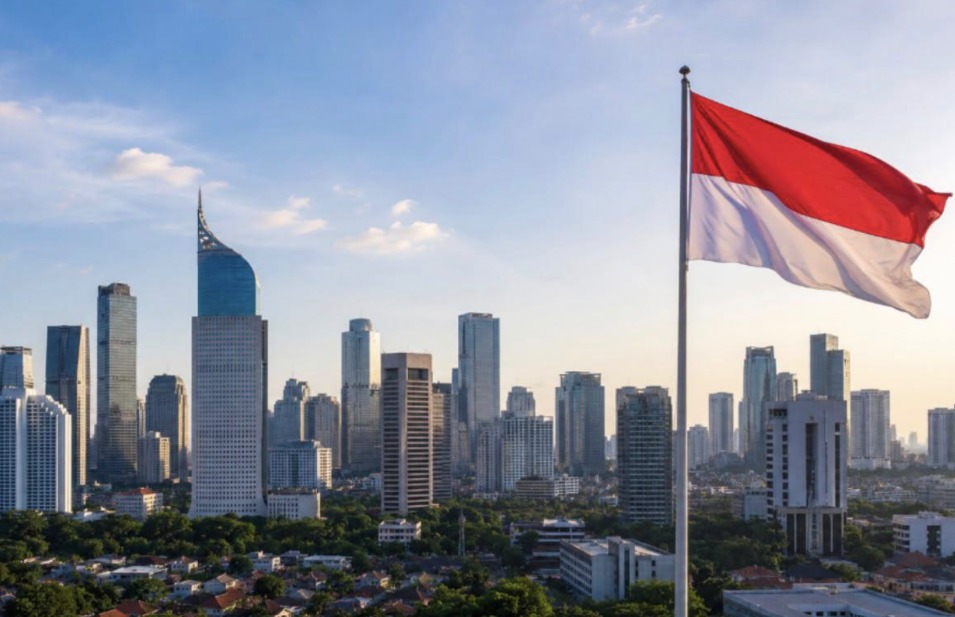
In this explainer piece, our APAC practice Senior Account Executive, Soojin Jang, and Communications and Stakeholder Engagement Lead Haniva Sekar Deanty unpack East Asia’s outreach to Indonesia. They argue that Indonesia remains to be central to Japan and South Korea’s aim for supply chain diversification and economic security.
Executive Summary
- As the largest economy in Southeast Asia and a major supplier of critical minerals and energy resources, Indonesia has become increasingly important to regional supply chains, energy security, and industrial development strategies.
- Japan has expanded its long-standing economic and development partnership with Indonesia beyond traditional infrastructure cooperation, placing greater emphasis on energy security, green transition initiatives, and supply chain resilience.
- South Korea has deepened its engagement with Indonesia through EV battery supply chains, critical mineral cooperation, advanced manufacturing investment, and defence collaboration, including the KF-21 fighter jet programme.
- While Japan and South Korea pursue cooperation with Indonesia through different channels, both increasingly view the country as a key partner for economic security and supply chain diversification. At the same time, Indonesia is leveraging these partnerships to support industrial upgrading, attract investment and technology, and strengthen its strategic autonomy.
Strategic Context: Why Southeast Asia, Why Indonesia?
Southeast Asia has emerged as a critical arena in the evolving geopolitics and geoeconomics landscape of Asia Pacific. Positioned at the intersection of major maritime trade routes and global supply chains, the region functions as both a conduit for global commerce and a site of strategic competition among external powers. For advanced economies like Japan and South Korea, Southeast Asia remains not only a peripheral region but a pivotal component of broader effort to secure economic resilience, diversify supply chain, and maintain regional influence. Japan and South Korea themselves remain two of ASEAN Dialogue Partners, an institutionalised partnership between ASEAN and external key actors for cooperation in varied sectors. This growing importance is reflected in regional initiatives and strategies where they increasingly prioritise ASEAN as a key partner in building economic security networks and sustaining a rules-based regional order.
Indonesia occupies a uniquely pivotal position. As the largest economy and most populous state in Southeast Asia, Indonesia represents both a substantial domestic market and a critical production base. Its economic scale, combined with a growing middle class, positions it as a key destination for foreign investment and industrial relocation, particularly amid efforts to reduce dependence on China-centered supply chains. At the same time, Indonesia’s de facto leadership role within ASEAN amplifies its strategic weight, allowing external partners to engage not only bilaterally but also indirectly with the broader regional architecture.
More importantly, Indonesia sits at the heart of several global structural transitions, particularly in energy and industrial supply chains. The country has emerged as a central node in the electric vehicle (EV) ecosystem due to its vast nickel reserves, which are essential for battery production. Indonesia holds the world’s largest nickel reserves, and in 2020, the country banned the export of raw nickel ore as a mean to increase foreign investment to have downstream projects within its border. Government-led downstreaming policies have transformed Indonesia from a raw material exporter into a key site for value-added processing and EV-related manufacturing, effectively positioning it as a new hub in global battery supply chains. This transformation aligns with broader global shifts toward clean energy and highlights Indonesia’s strategic relevance in the energy transition.
In parallel, Indonesia continues to play a significant role in traditional energy markets. In 2024 alone, Indonesia exported around 405 million metric tons of thermal coal, while LNG, along with crude oil and petroleum products contributed together a total 6% of Indonesia’s export portfolio, equivalent to USD15.87 billion. As a major exporter of liquefied natural gas (LNG) and coal, it remains integral to the energy security of Asian economies, including Japan and South Korea, both of which rely heavily on imported energy resources. This dual role, by being a key exporter of fossil fuels like LNG and coal, along with strengthening foothold in nickel supply chain, further enhances Indonesia’s strategic value.
Japan’s Approach: Energy and Infrastructure Anchoring
Japan and Indonesia have maintained close relations centred on economic and development cooperation since establishing diplomatic ties in 1958. As one of Indonesia’s major investors and providers of Official Development Assistance (ODA), Japan has supported the development of transport, energy, and industrial infrastructure. This cooperation has formed an important foundation for bilateral relations. In recent years, this cooperation has expanded beyond traditional areas to include strategic issues such as economic security, supply chain diversification, and energy transition.
Against this backdrop, Indonesia has become an important partner for Japan from both economic and geopolitical perspectives. As the largest economy and most populous country in Southeast Asia, Indonesia serves as a major production base for Japanese companies and occupies a strategic position along key maritime routes connecting the Indo-Pacific. In addition, its abundant reserves of LNG and nickel contribute to Japan’s energy security and supply chain stability. In particular, energy cooperation remains a key pillar of the bilateral relationship. Japan relies heavily on imported energy resources, and Indonesia remains one of its major LNG suppliers. As geopolitical tensions in the Middle East and volatility in global energy markets have increased, the importance of securing stable energy supply chains has grown accordingly. In response, Japan has continued to strengthen its energy cooperation with Indonesia.
Alongside this, Japan has also positioned itself as a key partner in supporting Indonesia’s Green Transition. The Asia Zero Emission Community (AZEC), a Japanese-led regional initiative, aims to promote both economic growth and decarbonisation across Asia, with Indonesia serving as one of its principal partners. Through investments and technical cooperation in renewable energy, power grid modernisation, hydrogen and ammonia technologies, and carbon reduction projects, Japan has sought to expand its Green Transformation (GX) agenda across Southeast Asia.
More recently, cooperation between the two countries has expanded beyond energy and infrastructure into advanced manufacturing and strategic technologies. At the Indonesia–Japan Business Forum held in Tokyo in March 2026, a range of projects focusing on semiconductors, artificial intelligence (AI), and decarbonisation technologies were announced. These developments demonstrate how the bilateral relationship is evolving beyond traditional development assistance and resource cooperation towards a broader strategic partnership in advanced industries and technology.
Taken together, Japan’s approach towards Indonesia has evolved from a relationship centred on ODA and infrastructure investment into a broader economic security partnership encompassing energy security, green transition, supply chain resilience, and advanced technology cooperation. As US–China strategic competition and global supply chain restructuring continue to intensify, Japan increasingly views Indonesia as a key strategic partner in Southeast Asia and an important pillar of its long-term engagement in the Indo-Pacific.
South Korea’s Approach: Advanced Manufacturing and Defence Cooperation
South Korea and Indonesia have developed their relationship primarily through trade and manufacturing cooperation since establishing diplomatic relations in 1973. As South Korean companies expanded their presence in industries such as automobiles, electronics, and steel, economic ties between the two countries have steadily deepened. In 2017, the two countries established a Special Strategic Partnership, which was upgraded to a Special Comprehensive Strategic Partnership (SCSP) in 2026. As a result,cooperation has expanded further into future-oriented strategic sectors, including EV battery supply chains, critical minerals, defence industries, artificial intelligence (AI), and energy transition.
Against this backdrop, Indonesia has become increasingly important to South Korea’s economic security and supply chain strategy. Indonesia serves not only as a strategic gateway to the ASEAN market but also as the world’s largest holder of nickel reserves, supplying critical minerals essential to the battery and electric vehicle industries. In particular, cooperation in electric vehicles (EVs) and battery supply chains has emerged as a key area of bilateral engagement. While South Korea’s early investments in Indonesia were concentrated in mining and labour-intensive manufacturing, cooperation has gradually expanded into higher value-added sectors such as batteries, electric vehicles, and advanced materials. Major companies including Hyundai Motor and LG Energy Solution have invested heavily in developing Indonesia’s battery and EV ecosystem. These investments align with South Korea’s broader efforts to reduce dependence on China-centred supply chains and strengthen supply chain resilience.
Defence cooperation has also become an important pillar of the bilateral relationship. The joint development of the KF-21 fighter jet is widely regarded as a symbol of technological cooperation and strategic trust between the two countries. In 2026, the KF-21 is expected to be delivered to Indonesia for the first time as a partner in the programme. Looking ahead, defence cooperation could enter a new phase if joint production with Indonesia’s state-owned aerospace company PT Dirgantara Indonesia (PTDI) moves forward on a larger scale.
As a result, economic cooperation between South Korea and Indonesia is evolving beyond traditional manufacturing investment towards a broader economic security partnership encompassing critical minerals, EV supply chains, and defence cooperation. As global supply chains continue to be reshaped and technological competition intensifies, Indonesia is increasingly viewed as a key partner in strengthening South Korea’s supply chain resilience and expanding its strategic presence in Southeast Asia.
Converging Interests & Indonesia’s Perspective: Strategic Hedging and Economic Leverage
Despite Japan and South Korea approached cooperation with Indonesia differently, with Tokyo emphasizing energy security, while Seoul focusing more heavily on industrial integration and defence cooperation, their interests increasingly converge around a common objective: securing long-term access to strategically important markets, resources and supply chains in Southeast Asia. With intensifying geopolitical tensions in the area, both countries seek to strengthen their cooperation with Indonesia as an increasingly critical node in broader regional economic and strategic architectures.
For both Japan and South Korea, Indonesia occupies a central position in efforts to secure energy supplies, strengthen industrial resilience, and diversify production networks amid concerns over supply chain disruptions and excessive dependence on single markets. Observers deemed Indonesia to have uninterrupted growth resilience, which started from lower base in the 1990s and have established a consistent growth ever since. Indonesia’s vast reserves of critical minerals, particularly nickel, alongside its role as a major exporter of LNG and coal, make it increasingly difficult to exclude from long-term economic planning. At the same time, its large domestic market provides opportunities for investment, manufacturing expansion, and technology deployment, reinforcing its attractiveness beyond resource extraction alone.
Despite this, Jakarta itself is not a passive recipient and has been leveraging the growing interest of external partners to advance its own developmental and economic objectives. This reflects a broader pattern of strategic hedging that has long characterisedIndonesia’s external engagements. Rather than aligning itself too closely with any single power, Indonesia has historically sought to maintain flexibility by cultivating diversified partnerships across multiple actors while preserving strategic autonomy. Under this framework, engagement with Japan and South Korea serves not only diplomatic purposes but also practical economic goals. Indonesia has increasingly utilised foreign investment and industrial partnerships to support downstreaming policies, expand domestic manufacturing capacity and facilitate technology transfers. Japan and South Korea simultaneously pursue forms of engagement with Indonesia through investment, infrastructure development, industrial cooperation and supply-chain partnerships. This dynamic creates opportunities for Indonesia to extract greater economic value from external interest by encouraging multiple partners to participate in its development priorities. By maintaining diversified partnerships while positioning itself as an indispensable market, energy supplier and industrial hub, Indonesia has strengthened its bargaining power within an increasingly competitive regional environment. In this sense, converging Japanese and South Korean interests do not diminish Indonesia’s agency, but rather they enhance Jakarta’s ability to shape outcomes in ways that support its long-term economic and strategic ambitions.
Conclusion
While Japan and South Korea have developed their partnerships with Indonesia through different channels and areas of cooperation, both increasingly view the country as a key partner for economic security, supply chain diversification, and long-term resilience. Indonesia’s importance stems not only from its abundant natural resources, but also from its growing domestic market, strategic location, and expanding role in regional supply chains.
At the same time, Indonesia is pursuing its own industrial transformation and seeking to move beyond a resource-exporting economy towards higher value-added manufacturing and technology-driven industries. By maintaining diversified partnerships with Japan, South Korea, and other major powers, Indonesia has sought to attract investment, technology, and industrial expertise while preserving its strategic autonomy.
Ultimately, the growing engagement of both Japan and South Korea with Indonesia reflects broader trends in economic security and supply chain competition across the Indo-Pacific. At the same time, Indonesia is leveraging this external interest to support industrial upgrading and economic growth, further strengthening its strategic value as Southeast Asia’s largest economy. As Indonesia continues to expand its role in advanced manufacturing and strategic industries, cooperation with both countries is likely to deepen further.
If you would like to learn more about the implications for your business, please contact us at hello@northstar-insights.com