
In this explainer, Senior Account Executives Juliana and Soojin from our APAC practice examine how the current Middle East conflict is reshaping Asia’s energy supply chains. Comparing responses across East and Southeast Asia, they identify China’s renewed and expanding role in the crisis, particularly its growing influence in newer sectors. Their analysis also exposes deep vulnerabilities within Asian energy supply chains, underscoring the urgent need for resilience building.
Executive Summary
- Iran war is triggering severe energy disruptions across Asia, exposing structural dependence on Hormuz-linked oil flows.
- Southeast Asia is facing acute economic and social shocks, highlighting deep vulnerability to external energy supply disruptions.
- China’s diversified imports and regional energy support are strengthening its role as a key energy security provider in Asia.
- US alliance dynamics are constraining South Korea and Japan, forcing a strategic balance between energy security and geopolitical commitments.
Southeast Asia: Energy Shock and Structural Vulnerability
Iran war is inflicting significant economic damage on countries across Asia, and in particular, disruptions to global oil supply are sharply increasing the burden on Asian states to secure energy. As around 90% of the oil and gas passing through the Strait of Hormuz typically heads to Asia, instability in the strait directly translates into an energy security crisis in the region. In early April, the Strait of Hormuz was temporarily blocked, cutting off approximately 10 million barrels of oil supply per day and delivering an immediate shock to the global energy market. In this context, the prolonged Iran war is expected to pose economic risks for Asian countries with high dependence on Middle Eastern crude oil.
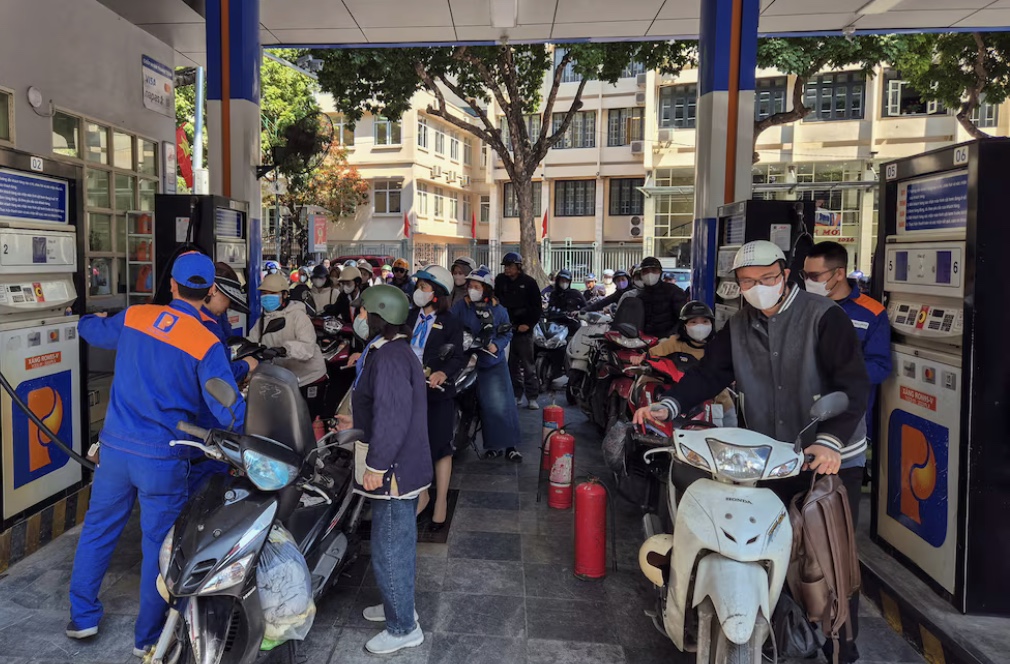
Asian countries generally have a high level of dependence on Middle Eastern oil, and Southeast Asia in particular is a region highly reliant on oil passing through the Strait of Hormuz. As a result, the oil shock caused by the closure of the strait is having direct impacts on the real economy, including the spread of fuel station shutdowns in parts of Southeast Asia. This shows that disruptions to energy supply chains are expanding into a complex economic crisis affecting not only industrial production but also everyday consumption.
The Philippines declared a national energy emergency on the 24th and currently holds only around 40 days’ worth of oil reserves. In response, the government has introduced mandatory energy-saving measures, fuel subsidies, and policies to reduce transportation costs. This demonstrates how vulnerable countries with limited energy reserves are to shocks from Iran war and highlights once again the importance of energy stockpiling strategies.
Some countries, including Indonesia and Sri Lanka, have implemented fuel rationing systems. However, if such measures are prolonged, they may lead not only to a contraction in domestic economic activity but also, combined with global supply chain instability, to a slowdown in global economic growth. This indicates that energy crises at the national level can expand into regional and global economic risks, and that energy security is closely linked to global macroeconomic stability.
Meanwhile, as of 2 April, reports indicate that vessels from Thailand and the Philippines have been guaranteed safe passage through the Strait of Hormuz, and Malaysia has also secured permission for seven of its oil tankers to transit the strait. This shows that Southeast Asian countries are strengthening diplomatic and logistical responses in order to maintain essential energy and fertiliser supply chains.
As the economic impact on Southeast Asian countries deepens with the prolonged Iran war, the ASEAN summit is scheduled to be held as planned in May in the Philippines. At the summit, key agenda items are expected to include responses to the energy crisis, as well as oil and petroleum product supply and food security. This goes beyond simple crisis response and may serve as an opportunity for regional states to explore a collective energy security strategy, while also acting as an important test of ASEAN’s capacity for coordinated action and policy alignment.
East Asia: Strategic Responses and Alliance Constraints
The impact of Iran war is also causing major disruptions to energy supply in East Asia. This crisis goes beyond simple supply instability and is acting as a complex crisis that simultaneously tests the energy dependence structure and diplomatic choices of East Asian countries.
As energy supply uncertainty increases due to the prolonged Iran war, the Japanese government is raising the level of its response to secure petroleum products. The Japanese government instructed a detailed assessment of necessary petroleum product demand and the diversification of procurement sources, which is interpreted as a strategic response to reduce dependence on specific regions.
In the case of China, among East Asian countries, it imports a significant amount of crude oil from Russia and has diversified its import sources, and is therefore assessed to have a relatively stable energy supply structure compared to South Korea, Japan, and Taiwan. This shows that a strategy of diversifying geopolitical risks is effective in an actual crisis situation, beyond simple supply stability. Furthermore, China is expanding energy support to Southeast Asian countries. Recently, China is reported to have supplied approximately 260,000 barrels of diesel to the Philippines and around 100,000 barrels of petroleum products to Vietnam. This may act as an opportunity for China to expand its influence in the region in the context of the energy crisis triggered by Iran war.
Meanwhile, South Korea and Japan, which are linked through alliance relations with the United States, are showing a more cautious attitude toward the US response to Iran war. In particular, as President Donald Trump requested Japan and South Korea in February to dispatch naval vessels to the Strait of Hormuz, allied countries are also facing a strategic dilemma. In a situation where it is difficult to directly refuse US requests, and considering that both South Korea and Japan have high dependence on oil passing through the strait, a balanced approach aimed at avoiding direct conflict between the United States and Iran appears to be emerging. This shows that allied countries are adjusting their strategic choices between security dependence and economic interests.
On 1 April, President Trump mentioned the South Korea US alliance and pointed out South Korea’s lack of contribution regarding the Strait of Hormuz, while pressuring participation in escort operations. In response, the South Korean government is maintaining a cautious response stance. On 2 April, the South Korean presidential office stated that it is closely monitoring the situation of relevant countries and will cooperate with the international community to stabilise energy supply chains. At the same time, South Korea has raised both the resource security alert and the natural gas crisis alert by one level, reflecting the seriousness of the situation. This shows that the energy crisis is expanding beyond a diplomatic issue into a domestic policy issue directly linked to people’s daily lives. Japan is also maintaining a cautious position as a key US ally. The Japanese government has adjusted the tone of its diplomatic statements, expressing that it expects negotiations related to Iran to proceed in a positive direction. This suggests that Japan is also showing strategic caution in maintaining a balance between energy security and alliance politics.
Overall, this energy crisis goes beyond a simple supply shock and is affecting both the energy security structure and geopolitical dynamics of the Asian region. Southeast Asia is showing structural vulnerability due to its high dependence on imports from the Middle East and relatively limited response capacity, while in East Asia, country-specific response strategies and diplomatic constraints are clearly emerging. In particular, China is expanding its influence through supply chain diversification and regional support, while South Korea and Japan are seeking a balance between energy security and strategic choices within the framework of their alliance with the United States. These differences are likely to act as important factors in shaping future energy cooperation structures and the regional power order in Asia.
If you would like to learn more about the implications for your business, please contact us at ceo@northstar-insights.com