
In this explainer piece, our East Asia Senior Account Executive Soojin Jang explains Japan’s growing engagement with the Middle East. She highlights how the strategic interdependence is necessitated by the current global political climate driven by AI supply chain localisation, critical minerals diversification and economic security frameworks. Her assessment indicates that this partnership opens significant value for Japanese firms looking to move beyond traditional target markets into new high growth regions including the Middle East.
Executive Summary:
- The 27-year Qatar Energy–JERA agreement strengthens Japan’s long-term energy security and deepens strategic interdependence with Qatar.
- With limited nuclear restarts and rising digital-era electricity demand, LNG has become central to Japan’s industrial competitiveness.
- Bilateral ties are expanding beyond energy into AI supply chains and critical minerals diversification, embedding the partnership within a broader economic security framework.
Japan–Qatar LNG Co-operation and Supply Chain Diversification Strategy
Japan and Qatar have maintained diplomatic relations for over fifty years since establishing formal ties in 1972, sustaining high-level strategic dialogue particularly focused on energy security and stability in the Middle East. The central pillar of bilateral co-operation is liquefied natural gas (LNG). Qatar is one of the world’s largest LNG exporters, and Japan is among the principal importers of Qatari LNG. As a result, their relationship has evolved beyond a purely commercial arrangement into one of strategic interdependence.
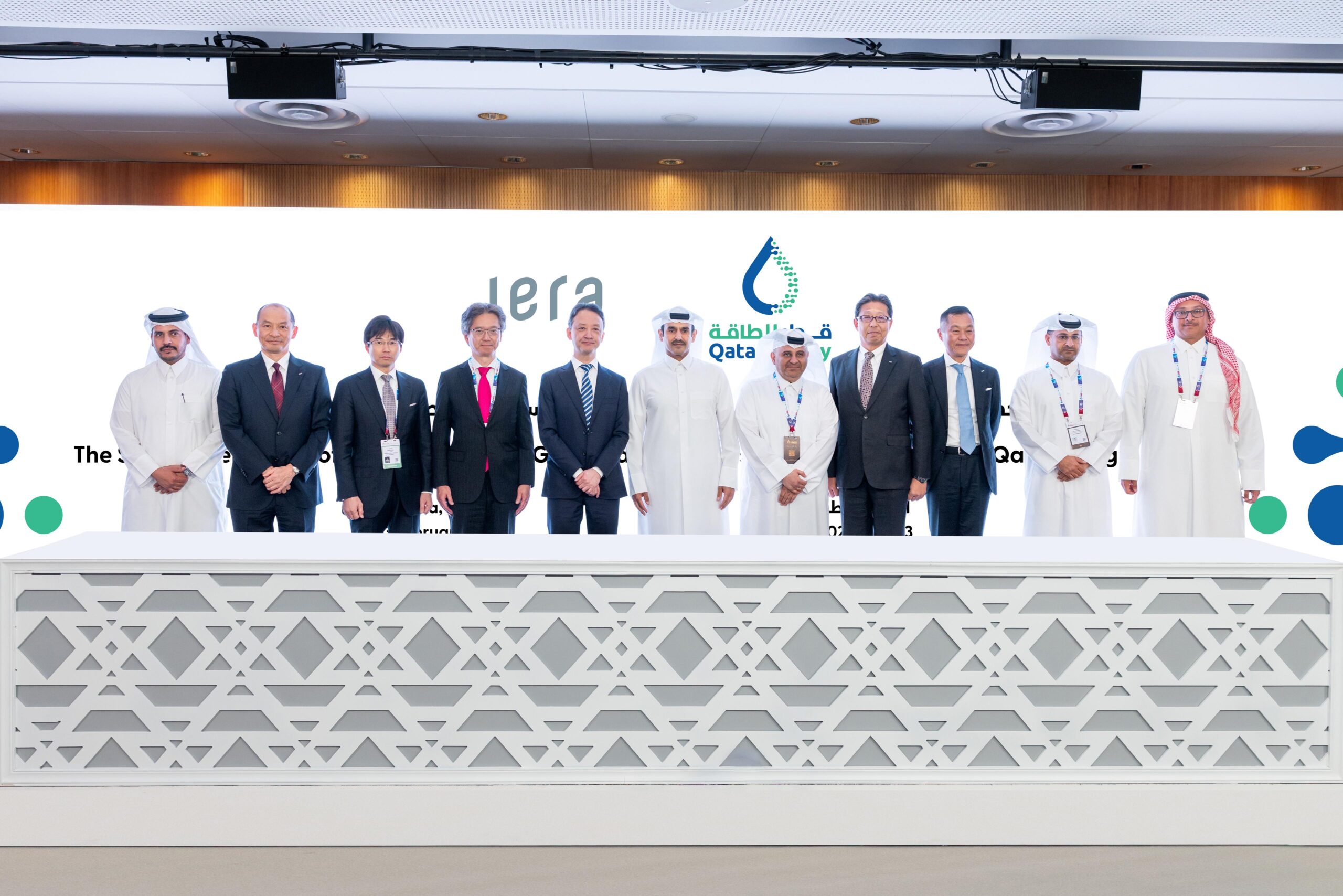
A notable recent development is the LNG supply agreement between QatarEnergy and JERA, Japan’s largest power generation company. During the 21st International LNG Conference and Exhibition (LNG 2026), held in Doha in February 2026, the two sides concluded a long-term Sales and Purchase Agreement to supply up to three million tonnes of Qatari LNG annually for 27 years. The agreement will take effect in 2028 and will ensure the stable delivery of three million tonnes per year to Japan over the subsequent 27 years.
JERA, as Japan’s largest power generation company and a major global energy enterprise, regards the agreement as a significant reinforcement of bilateral partnership. Naoto Hisajima, Japan’s Ambassador to Doha, stated that the agreement symbolises the trust and long-term nature of the relationship, reaffirming Qatar’s position as a core energy partner for Japan. Through this arrangement, Japan has strengthened its capacity to secure stable LNG supplies amid growing geopolitical uncertainty.
The strategic value of this co-operation has been demonstrated during periods of crisis. Following the Great East Japan Earthquake in 2011, Qatar provided emergency LNG supplies to Japan, offering tangible support for its energy security. Moreover, in the aftermath of the global energy crisis that emerged after 2021, Japan’s Ministry of Economy, Trade and Industry projected a potential gas shortfall of approximately 7.6 million tonnes in 2025. With nuclear restarts remaining limited and decarbonisation policies advancing in parallel, natural gas has become a core energy source within Japan’s energy transition framework.
Japan has historically relied heavily on Australian LNG. However, as Australia has increasingly prioritised domestic supply amid concerns over resource depletion, the need for supply chain diversification has intensified. In this context, the long-term agreement with Qatar carries substantial strategic significance within Japan’s broader energy security strategy.
At LNG 2026, QatarEnergy also concluded ultra-long-term agreements with other major Asian consumers, including Malaysia, thereby accelerating its supply expansion strategy. This reflects an effort to secure both supply stability and long-term demand foundations within the global LNG market.
JERA projects that Japan’s electricity demand will rise alongside the expansion of data centres and the semiconductor industry, and assesses that gas-fired power generation will play a critical role in maintaining grid stability. In an era of accelerating digital transformation, securing LNG is therefore not merely an energy issue but a strategic matter closely linked to national competitiveness.
In sum, Japan–Qatar LNG co-operation extends beyond short-term energy trade and contributes to broader strategic objectives, including energy security, supply chain diversification and enhanced industrial competitiveness. The agreement demonstrates the continued deepening of strategic partnership between the two countries despite market volatility and geopolitical uncertainty.
Beyond Energy: Expansion into AI Supply Chains and Critical Minerals Co-operation
In recent years, Japan–Qatar co-operation has begun to extend beyond LNG into the sphere of AI-era supply chain alliances. In October last year, the United States formed the ‘Pax Silica’ initiative together with key partner nations. The alliance seeks to secure stable supplies of strategic materials, including silicon and rare earth elements, which are essential for artificial intelligence and semiconductor industries. It was initially launched with seven members: the United States, Japan, South Korea, Australia, Israel, Singapore and the United Kingdom. Qatar subsequently joined, expanding the grouping to eight members.
Japan is experiencing rising electricity demand due to the expansion of data centres and semiconductor manufacturing facilities, with gas-fired power generation regarded as a core instrument for maintaining medium- to long-term grid stability. In this context, the long-term LNG agreement with Qatar may be interpreted as a strategic decision that supports the operational foundations of AI infrastructure.
At the same time, Japan has structurally recognised the risks associated with critical mineral supply chains amid deteriorating Sino-Japanese relations. During the 2010 Senkaku Islands dispute, China imposed restrictions on rare earth exports to Japan. This episode marked a turning point in Japan’s economic security policy and reinforced the perception that dependence on a single country must be reduced. It also strengthened the policy emphasis on supply chain diversification.
Accordingly, Japan appears to be broadening its partnership with Qatar beyond energy, extending co-operation into AI and advanced industrial supply chains. This approach reflects a wider strategy of expanding trusted partner networks in order to mitigate strategic vulnerabilities. Ultimately, Japan–Qatar relations are evolving into a complex strategic partnership that integrates energy security with advanced technology supply chain security. This represents a new model of co-operation linking LNG supply stability, the energy foundations of the AI industry, and the mitigation of critical mineral risks within a single strategic framework.
If you would like to learn more about the implications for your business, please contact us at ceo@northstar-insights.com