
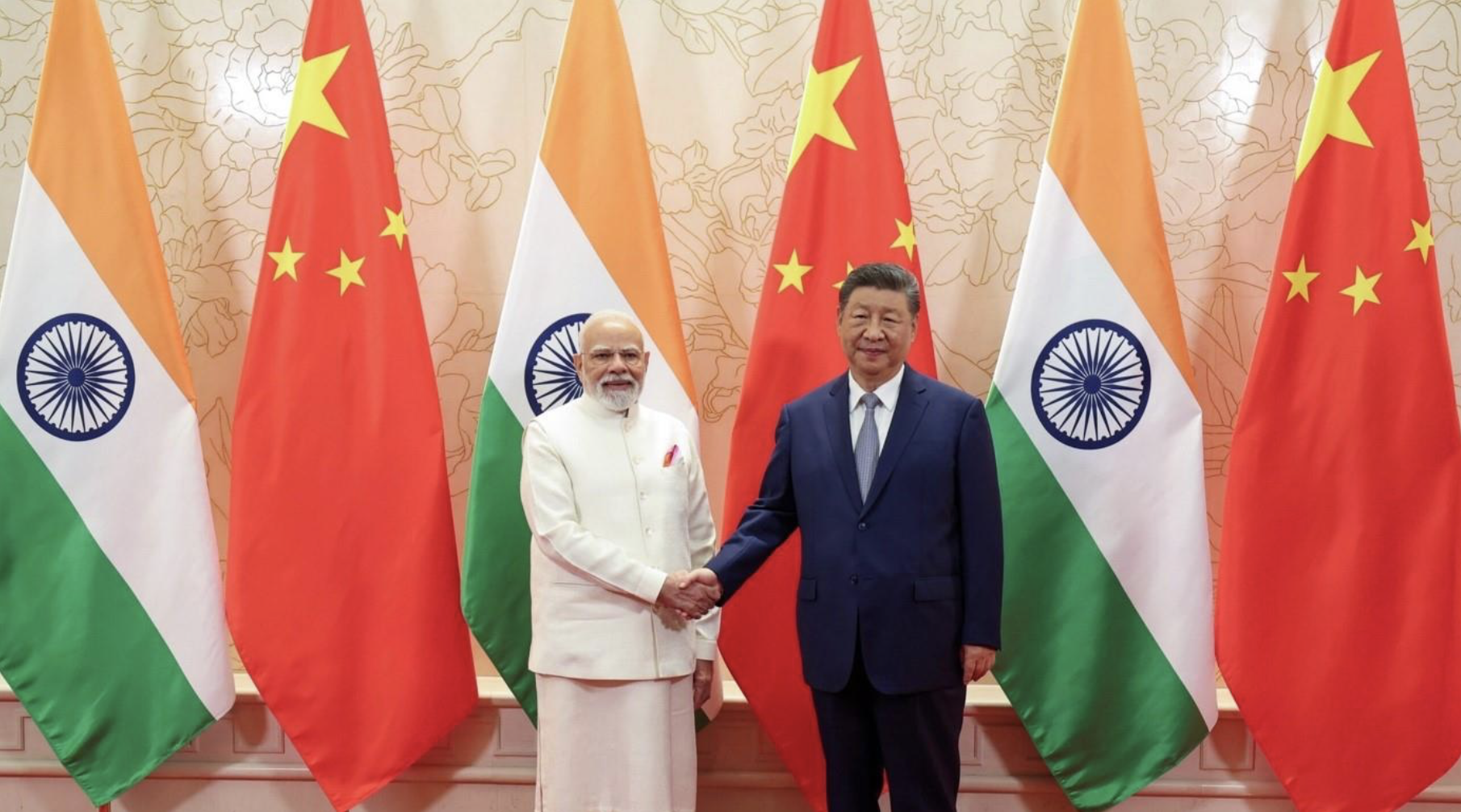
In this explainer piece, our APAC practice’s Account Executive Wesley, look at how India’s evolving FDI framework toward China-linked capital reflects a shift toward risk-based screening, balancing national security concerns with the need to sustain investment flows and maintain global competitiveness. By easing aspects of its foreign direct investment (FDI) policy, particularly rules introduced under Press Note 3 (PN3), New Delhi signals a subtle but important recalibration in how it manages China-linked economic exposure, seeking to safeguard strategic interests while remaining attractive to global investors.
Executive Summary
- India is recalibrating its FDI regime by easing aspects of Press Note 3 (PN3), shifting from broad restrictions on China-linked capital toward a more targeted, risk-based screening framework focused on ownership and control.
- The adjustment aims to reduce investment bottlenecks caused by blanket approval requirements, particularly for global funds with minor Chinese exposure, thereby improving deal flow and investor confidence.
- Economic considerations are a key driver, as India seeks to stabilize volatile net FDI inflows and attract long-term capital into priority sectors such as semiconductors, digital infrastructure, and renewable energy.
- While political tensions with China persist, the policy signals a pragmatic approach: maintaining strict oversight of strategic investments while allowing limited, indirect Chinese participation to support growth and global competitiveness.
The origin of India’s investment restrictions on China-linked capital
In April 2020, at the height of the COVID-19 pandemic and amid rising geopolitical tensions, India introduced Press Note 3 (PN3). The policy required that any investment from countries sharing a land border with India, including China, receive prior government approval. The move was widely seen as a response to concerns that Chinese firms might exploit weakened market conditions to acquire stakes in Indian companies, particularly in strategic sectors such as technology, finance, and infrastructure. It also reflected growing mistrust following border tensions between the two countries, notably after the Galwan Valley clash.
While PN3 aimed to protect sensitive sectors, it had unintended consequences. Many global investment funds, especially venture capital and private equity firms, often include Chinese investors as minority stakeholders. As a result, even investments with only indirect or minimal Chinese exposure were subjected to lengthy approval processes. This created bottlenecks, with hundreds of proposals reportedly delayed, increasing uncertainty and slowing deal-making.
A shift toward targeted investment screening
India’s latest policy adjustment introduces a more nuanced approach. Investments routed through global funds or companies that have only minor, non-controlling Chinese ownership, generally below a 10% threshold, are now eligible for the automatic approval route, rather than requiring case-by-case government clearance.
The shift signals a move away from blanket restrictions toward a more targeted assessment based on control and influence. While investments involving significant Chinese ownership or strategic sectors will continue to face strict scrutiny, passive financial participation is being treated with greater flexibility.
Economic pressures are driving policy recalibration
The policy recalibration reflects both economic necessity and strategic pragmatism. India continues to attract substantial foreign investment, with FDI inflows reaching approximately $81 billion in FY2024–25. However, the underlying trend is less robust than headline figures suggest. Net FDI inflows have been volatile, falling sharply in recent years, including a 62% drop to around $10.6 billion in FY2024. This divergence highlights the need to attract more stable, long-term capital.
At the same time, restrictive screening under PN3 created friction not only for Chinese investors but also for global funds from the U.S., Europe, and Asia. Many operate with diversified capital pools, making it impractical to completely exclude Chinese-linked capital without limiting investment opportunities. India is also seeking to accelerate growth in high-priority sectors, including semiconductors, digital infrastructure, renewable energy, and advanced manufacturing. These industries depend heavily on large-scale, cross-border financing. A rigid approval regime risked slowing project timelines and reducing India’s competitiveness as an investment destination.
What does this mean for China-India economic dynamics?
The policy change does not signal a broader normalization of China-India relations. Political and military tensions remain elevated, and mutual distrust continues to shape policymaking. However, the adjustment reflects a more calibrated approach to economic engagement. India is increasingly distinguishing between strategic risk and passive capital exposure. While direct Chinese investments remain tightly controlled, indirect participation through global funds is being cautiously permitted.
Notably, China’s direct investment footprint in India remains extremely limited. Chinese FDI stood at just around $2.67 million in FY2025, underscoring how restrictive policies have already curtailed direct inflows. Yet China’s economic significance for India is far greater in trade. Bilateral trade reached approximately $127.7 billion, with a pronounced imbalance. In the first two months of 2026 alone, India imported around $25 billion in goods from China, compared with exports of roughly $3 billion. This disparity highlights a key structural reality: India is far more dependent on China as a supplier than as a source of capital.
Evolving conditions for global investors
For global investors, the easing of PN3 rules is a positive development. It reduces regulatory uncertainty, shortens approval timelines, and broadens the pool of capital available for deployment in India. Private equity and venture capital firms stand to benefit. Many had faced operational challenges due to the need to restructure funds or seek approvals for each transaction. The new framework simplifies deal-making and could revive investment momentum that had slowed under the previous regime.
However, the regulatory environment remains complex. Investors must still carefully assess ownership structures, sectoral sensitivities, and thresholds to ensure compliance. The distinction between minority participation and controlling influence will remain a key determinant of approval pathways.
Broader economic and strategic impact
At a macro level, the policy shift underscores India’s effort to integrate more deeply into global supply chains without compromising national security priorities. It aligns with broader initiatives to boost domestic manufacturing and attract high-quality foreign investment.
At the same time, risks remain. Continued geopolitical tensions, whether along the disputed border or within the wider Indo-Pacific, could quickly influence regulatory attitudes. Moreover, selective screening of Chinese-linked investments means that some degree of friction will persist. The move also reflects a broader global trend toward selective economic decoupling. Rather than severing ties completely, countries are refining policies to manage specific risks while preserving economic benefits.
If you would like to learn more about the implications for your business, please contact us at ceo@northstar-insights.com