
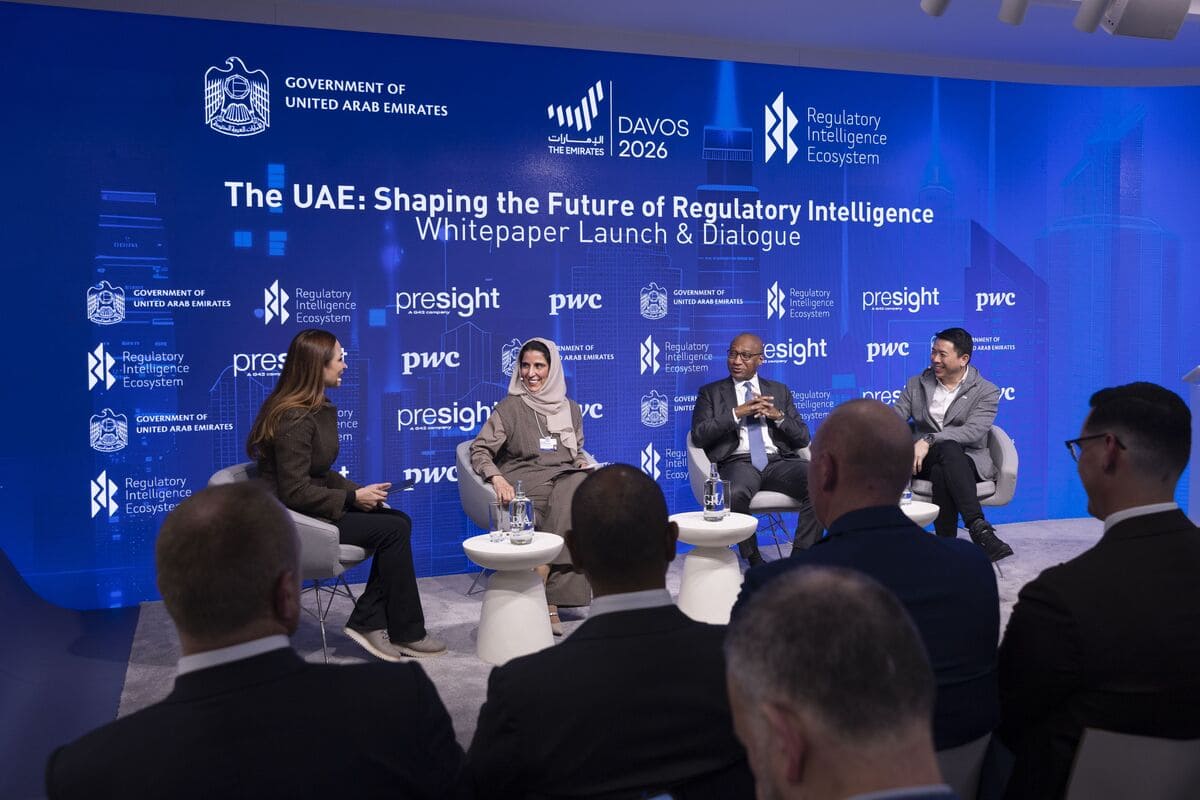
In this explainer piece, our MENA practice’s Senior Account Executive Tala Karkanawi explores how the UAE has matured into one of the world’s most competitive destinations for foreign direct investment, setting out a long-term vision for sustainable growth amid global economic uncertainty. Launched at the World Economic Forum Annual Meeting in Davos, the UAE’s recent white papers collectively position the country as a global investment and governance platform, anchored in diversification, innovation, and institutional adaptability rather than static economic models
Executive Summary:
-
The UAE attracted USD 30.7 billion in foreign direct investment in 2023, marking a 35 percent year-on-year increase and placing the country 11th globally by FDI inflows and second worldwide for greenfield investment projects. This performance reflects a broader shift in the UAE’s economic strategy, in which foreign capital is increasingly aligned with long-term structural transformation rather than short-term inflows.
-
At the centre of this strategy is the Ministry of Investment’s white paper, UAE Matures Into a Global FDI Magnet, which serves as a roadmap for achieving the objectives of the National Investment Strategy and the “We the UAE 2031” vision. Complementing this investment-focused agenda, the UAE has also launched the world’s first AI-driven Regulatory Intelligence whitepaper, signalling that regulatory innovation is now being treated as a core competitiveness lever alongside capital attraction.
Davos 2025–2026
The UAE’s use of Davos as a launchpad for both its investment and regulatory whitepapers is strategically deliberate. As global FDI flows face headwinds from geopolitical fragmentation, protectionism, and rapid technological disruption, the UAE is signalling continuity, openness, and institutional agility. At Davos 2025, the focus was on capital flows and investment platforms; by WEF 2026, the emphasis expanded to how regulation itself must evolve to keep pace with the Intelligent Age.
Speaking at Davos, H.E. Mohammad Alhawi, Undersecretary of the Ministry of Investment, emphasised that economic diversification, sustainability, and digital transformation are now embedded pillars of the UAE’s investment strategy. This vision was reinforced in 2026 by Maryam bint Ahmed Al Hammadi, Minister of State and Secretary-General of the UAE Cabinet, who framed the AI regulatory whitepaper as a shift from conventional regulatory cycles toward a living, evolving regulatory ecosystem capable of adapting in real time to technological and economic change.
A Fit-for-Purpose Investment Platform
The investment whitepaper argues that the UAE’s success rests on a fit-for-purpose platform designed for scale, speed, and resilience. Rather than relying solely on incentives, the UAE has built an integrated ecosystem combining investor-friendly regulation, streamlined licensing processes, dedicated economic and free zones, strong sovereign credit fundamentals, and extensive trade and investment agreements. This platform reduces entry barriers while enabling businesses to scale across regional and global markets with greater predictability.
This regulatory credibility is now being reinforced through the UAE’s AI-powered Regulatory Intelligence Ecosystem, which transforms static rulebooks into adaptive systems. By introducing a Regulatory Intelligence Glossary and a Unified Regulatory Digital Twin, the UAE is creating a live digital model of its regulatory environment capable of monitoring changes, analysing data, simulating economic and social impacts, and proposing policy amendments in real time. For investors, this signals a move toward regulatory foresight rather than regulatory lag.
Capital Inflows to Economic Transformation
A central theme across both white papers is the repositioning of FDI as a strategic policy instrument, not merely a financial metric. Under the National Investment Strategy, the UAE aims to raise FDI’s contribution to GDP from 6 percent to 8 percent, reinforcing the role of foreign investment in productivity growth, innovation, and resilience rather than capital volume alone.
The AI regulatory whitepaper extends this logic to governance itself. Through mechanisms such as the Sovereign Governance-in-the-Loop (SGiL) framework, the UAE ensures that AI enhances regulatory decision-making while preserving human authority and constitutional principles. This approach reflects an understanding that economic transformation requires not only capital and technology, but trust, accountability, and institutional legitimacy.
Who Is Investing and Why?
The UAE’s diversified investor base further reinforces its position as a trusted economic partner. In 2023, total capital inflows reached USD 16 billion, led by investments from the United States, India, the United Kingdom, France, and Saudi Arabia. This diversity reduces concentration risk and demonstrates confidence in the UAE’s long-term policy trajectory rather than short-term market conditions (Al Etihad).
The country’s ranking as the second-largest global destination for greenfield FDI projects reflects investor confidence not only in infrastructure and market access, but increasingly in regulatory predictability and adaptability, a factor now amplified by the UAE’s move toward AI-enabled governance.
What does this mean for Investors and Businesses
For investors and multinational firms, the convergence of investment-friendly policy and AI-driven regulation significantly reshapes the UAE’s risk profile. Lower regulatory friction, faster policy adaptation, and real-time regulatory intelligence reduce uncertainty in fast-moving sectors such as technology, advanced manufacturing, renewable energy, and digital services. The UAE’s regulatory ecosystem is no longer reactive, but anticipatory, offering a structural advantage in an era of rapid technological change.
At the same time, the UAE increasingly commands a resilience premium, offering institutional stability, global connectivity, and forward-looking governance at a time when many jurisdictions struggle to modernise regulatory frameworks.
A New Investment and Governance Architecture
Taken together, the UAE’s recent white papers signal a transition toward integrated investment and governance leadership. Foreign investment is being embedded within a broader system supported by robust physical infrastructure, advanced digital capabilities, comprehensive trade agreements, and now a living, AI-powered regulatory framework that evolves alongside markets and technologies.
As articulated at Davos, the ambition is explicit: to position the UAE among the top ten global destinations for foreign investment by 2031, while simultaneously setting a global benchmark for intelligence-led regulation. For investors, policymakers, and businesses alike, the message is clear, the UAE is not merely competing for capital but actively shaping the future architecture of global investment and governance in the Intelligent Age.
If you would like to learn more about the implications for your business, please contact us at ceo@northstar-insights.com